Blue Eyed Black Lemur
Sep. 11th, 2017 02:01 pm![[personal profile]](https://www.dreamwidth.org/img/silk/identity/user.png) guppiecat
guppiecat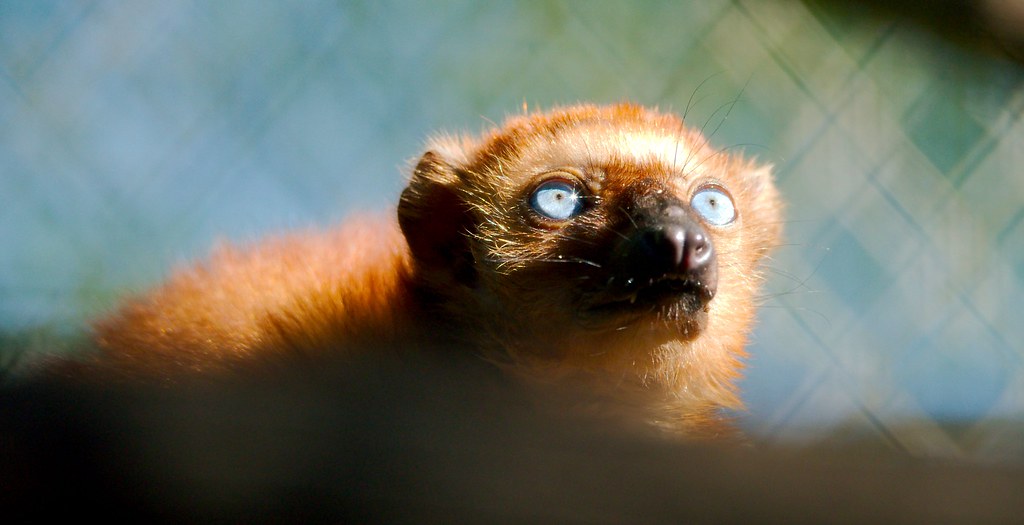
The blue eyed black lemur is brown (well, the females are).
It is also one of the most endangered primates on the planet, expected to go extinct in the wild by 2026.
The way they do these calculations is interesting. As is often the case, not enough is known about the species to truly calculate a “death date”. Instead, assumptions are made:
– Assumption that a generation is 8 years long
– Knowing the rate of habitat degregation, then comparing it to the generation length … in this case, more than 80% habitat loss in three generations
– Amount of population fragmentation and density in remaining pockets, ranging between 24-97 individuals per square kilometer
– Group size of 4-11 individuals
– Infant mortality of around 23%
– What the animal eats – in this case, we’re fortunate, as they are highly omnivorous
So the calculation basically says: How many do we have? How quickly do they make more of themselves? How quickly do they die? Given what we know about what they eat and where they live, as things change, how much sooner will they die and how much more slowly will they reproduce? That’s your projected death date.
The good news is that you can change this number by:
– Improving their habitat through education of native peoples, funding, and experimentation
– Helping them to reproduce more quickly through habitat creation, genetic analysis, and artificial insemination
– Helping them to live longer and therefore reproduce more often, through veterinary and nutritional assistance
There is only one type of organization that focuses on all three of these activities.
Zoos.
Originally posted at stories.starmind.org.


no subject
Date: 2017-09-11 04:24 pm (UTC)no subject
Date: 2017-09-12 04:36 am (UTC)Minnesota Zoo, Houston Zoo, and the San Diego zoos all have really good stories to tell there.