Expand Cut Tags

No cut tags
guppiecat: (Default)

A few days ago, someone broke into a zoo and was bitten by a tiger. This happens and, based on my discussions with zookeepers, is one of the fundamental design criteria when creating an exhibit. Yes, it is important to create a place in which the animal can be as intellectually and emotionally fulfilled as possible, and that it be kept healthy and kept from getting out. However, it’s just as important to keep people from getting in. If you follow zoo news, you’d notice that there about as many stories about stupid people breaking into cages as there are about clever animals breaking out.


Below, however, is a list of headlines for this one single incident. This comes from a Google Alert on the word “zoo” because I find it’s a good way to get an unfiltered view of what’s happening. This one, however, is fascinating because of the way the headlines came out. Take a look at the headlines below, then, if you have time, take the time to read McSweeny’s “Interactive Guide to Ambiguous Grammar,” that explores this issue deeper more deeply than I will be able to.

This gets a bit long )

Originally posted at stories.starmind.org.
guppiecat: (Default)


This photo was taken by J. G. Hubbard in 1898.

Many people know the story of the passenger pigeon: the massive flocks where a single migration blocked out the sun for days, the shooting contests where a single gunshot could kill as many as 61 birds, the 7.5 million birds killed over five months in Petoskey, Michigan in 1878: 7.5 million birds were killed in a five month period.

We’d be wrong.

Extinction is complex. Hunting was certainly a significant factor, but it’s hard to eradicate a species through hunting alone. At the same time people were blasting away at the sky, we were also stripping away forests, eliminating their food and shelter. All of these activities together split the large flock into many smaller ones. This matters because the passenger pigeon was a highly social bird and, without large numbers in the colony, they simply couldn’t sustain the population. Passenger pigeons became extinct many years before the death of its last member.

The last passenger pigeon died, in the Cincinnati Zoo, one hundred years ago today. It survived in captivity only fourteen years after it went extinct in the wild. Not all animals are like that. Père David’s deer once ranged across all of China and was sufficiently well known to feature in their mythology. The species has, however, been extinct in the wild for a very long time, surviving for centuries in a private zoo owned by the Emperor of China. Today, it lives on in various zoos throughout the world. The scimitar oryx once roamed North Africa. It was known in both ancient Egypt and Rome. In 1936, there were at least ten thousand. Just over 50 years later, only a handful remained. Today, like the deer, it lives on only in zoos.

And that’s a problem. If a species can survive 50 to 100 years in zoos, it starts to seem normal. Imagine the feeling of wonder one feels walking through the forest and stumbling upon a deer that, in mythology, combined an ox’s strength, a horse’s speed, a deer’s agility and a donkey’s sense of direction. This is the very deer that helped to found the Zhou dynasty and that was believed to grant eternal life.

Now imagine seeing the animal behind bars. They’re still with us … but it’s not the same.

Today, the IUCN lists 4,574 species as critically endangered. The World Wildlife Fund is focusing on a mere 16 well known species. These are species that, if you work at it a bit, can still be seen the wild. You could go to Africa and see a tribe of immensely strong gorillas resting in a glade, caressing one another. You could go to Sumatra and, with luck, get to watch a wild tiger slowly stalking her way through the forest, two cubs trailing behind. In French Guiana, you could see a mass hatching of baby leatherback turtles slowly making their way to sea.

It is very likely that our grandchildren will not be able to do any of these things.

It is also very likely that our grandchildren’s grandchildren will never be able to see any tigers anywhere in the wild. They may never see a whale rising from the depths, showering them with spray. They’ll never get to visit otters, large as people, swimming in the Amazon or see a red crowned crane stalking a fish through a reedy pond.

If you look at the world’s 100 most threatened species, you’ll likely not recognize any of them. A common reaction to seeing lists like this is:

“So what if we lose Bulmer's fruit bat or the White bellied heron, there are tons of other bats and herons in the world.”

When the next generation looks at their list of threatened species, they’ll feel the same way. The same for their children.

Extinction takes time, if future generations are to value the creatures we love, we must ensure they’re not so rare that our children don’t care. In 1857, most people couldn’t conceive of a world in which passenger pigeons wouldn’t fill the skies. When asked to protect them, the Ohio Senate stated:

“The passenger pigeon needs no protection. Wonderfully prolific, having the vast forests of the North as its breeding grounds, traveling hundreds of miles in search of food, it is here today and elsewhere tomorrow, and no ordinary destruction can lessen them, or be missed from the myriads that are yearly produced.”

Today, we can’t conceive of such a world. I’d hate for someone, one hundred years from now, to be writing something similar about the tiger, gorilla or turtle with nothing left but a photograph and some stuffed specimens collecting dust in a handful of museums.

If this would bother you too, please think about taking action with the WWF or donating to the IUCN.


One last thing. When a species dies in captivity, we know their names. This is the song of Martha, Last of the Passenger Pigeons, by John Herald.

guppiecat: (Default)

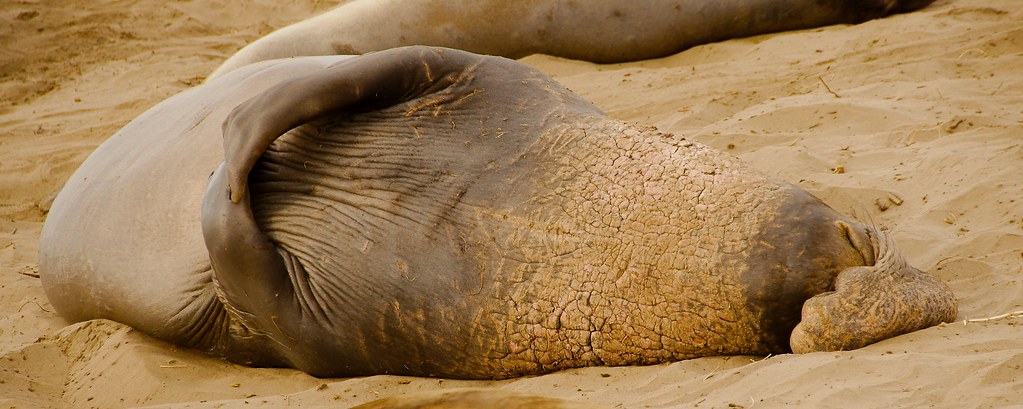
DSC_3128

Did you know that elephant seals crawl up on land to rest and then hatch out of their skin like butterflies (but they don’t fly).

Did you know that their nose works like a rebreather?

Did you know that they have sinuses in their abdomens?

Did you know that all of these are actually true?


Elephant seals are neat.

guppiecat: (Default)

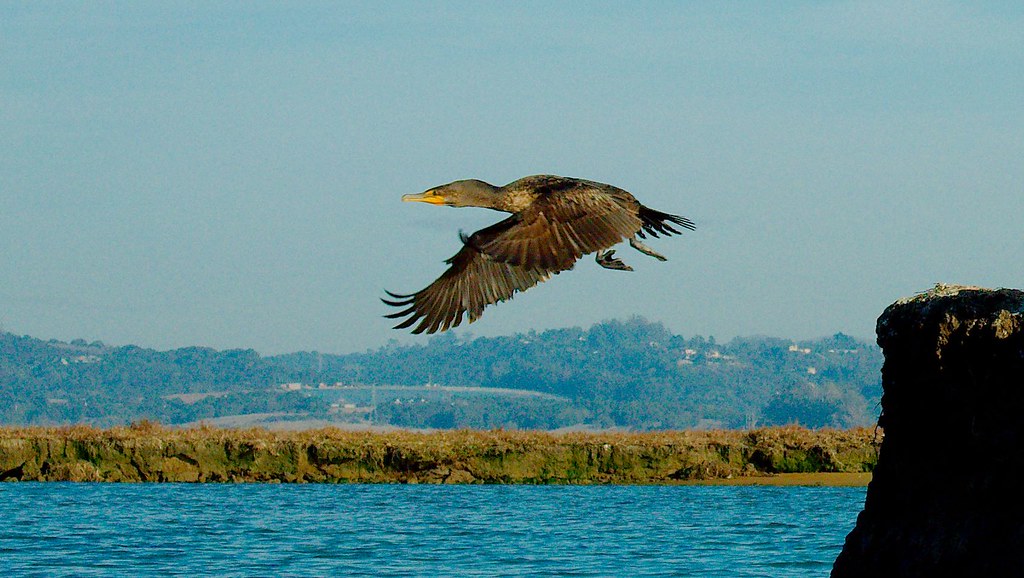
DSC_1150


A (somewhat) serious post.


Cormorants are cool because they’re basically really crappy ducks. Ducks have oil in their feathers to help waterproof them for their aquatic life style. (The book Ducks Don’t Get Wet is a great resource for more information, if you’re less than this many: ✋.) One can imagine a time in history when little dinosaurs were floating in the water thinking “this is way too cold, let’s develop oils!” and, millions of years later, we get ducks. Cormorants are just starting out. Who knows, maybe they’ll figure out the oil trick and stop having to spend so much time drying themselves out. Maybe, though, they’ll do something else. They could develop a rubber-like feather (like the kiwi did). They could develop hydrophobic feathers (like lily-pads). They could go even weirder and develop some symbiotic relationship with an algae or something that needs the water more than they do, which absorbs it into their developing young and, when mature, drops off the bird at night, leaving it dry and ready for the next day.


Sadly, the only three ways to find out are:


1) Develop a time machine and travel forward to find out what happens.

2) Develop a stasis machine and be stuck in mid thumb-twiddle for several million years.

3) Hope someone else invents a time machine, thinks that cormorants are just as cool as you do, and comes back in time to tell you all about it. I’m hoping for a visitor at ten this morning.

guppiecat: (Default)

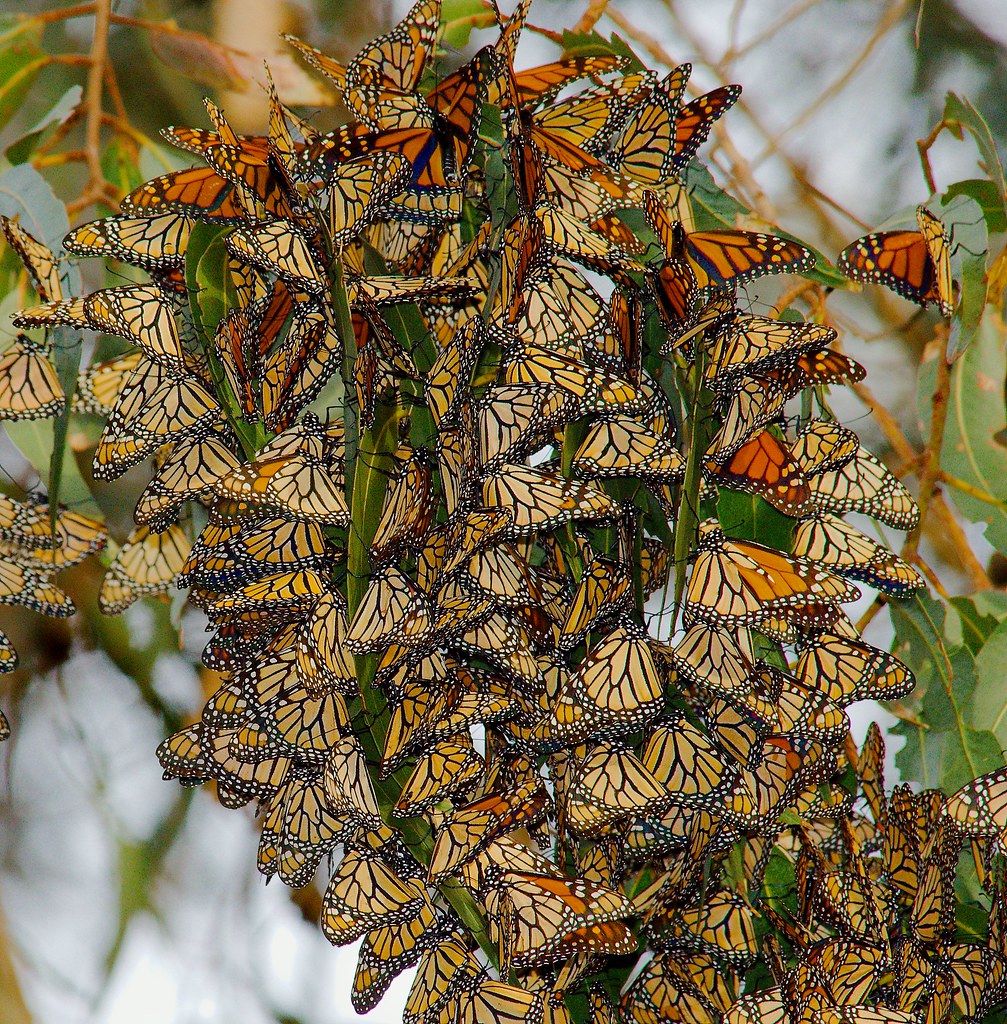
DSC_3641


A serious post this time.


Monarch butterflies have a multi-generational migratory cycle. It takes up to four generations for them to flutter between Canada and Mexico every season. As one generation dies, the next one is born hatched. However, monarch caterpillars only eat milkweed. If there’s none available at the stopping place, an entire line of butterflies will die out. As a single species, the monarch illustrates both the complexity and fragility of life. Sadly, we are on the cusp of losing them forever.


In the Winter, monarchs form clusters (or roosts) on branches. This photo is from California, which represents a different set of monarchs. The photographs from Mexico (the primary migrating population) are stunning. I hope to get there some day. The University of Minnesota has a good overview of what happens.


Today, though we’ve answered the question of “Where do the monarchs go?”, we still haven’t figured out how best to protect them. That’s where Monarch Watch comes in. Through a capture and release program, you (as a civilian scientist) can add data to the conservation efforts. By creating monarch waystations, you can help them along their long journey.


When I first went monarch tagging, and I caught (gently) that first butterfly, it nothing like what I had expected. When you take a monarch from the net, you suddenly know, at level deeper than knowledge, how fragile nature can be. When you hold its wings to tag it, you suddenly realize how strong nature can be too. If you have never had that experience, you’re missing out. You owe it to yourself, and future generations, to get involved with the monarch project, at least once.


Bring a friend.

Profile

guppiecat: (Default)
guppiecat

April 2026

S M T W T F S
   1234
567 891011
12131415161718
19202122232425
2627282930  

Most Popular Tags

Syndicate

RSS Atom

Style Credit

Page generated May. 3rd, 2026 03:30 pm
Powered by Dreamwidth Studios